
What We’re Really Fighting For: The Quiet Genius of Tolkien’s Small Moments
Beyond battles and magic, The Lord of the Rings endures because of the silences—shared meals, quiet talks, and the simple humanity that makes Middle-earth feel like home.

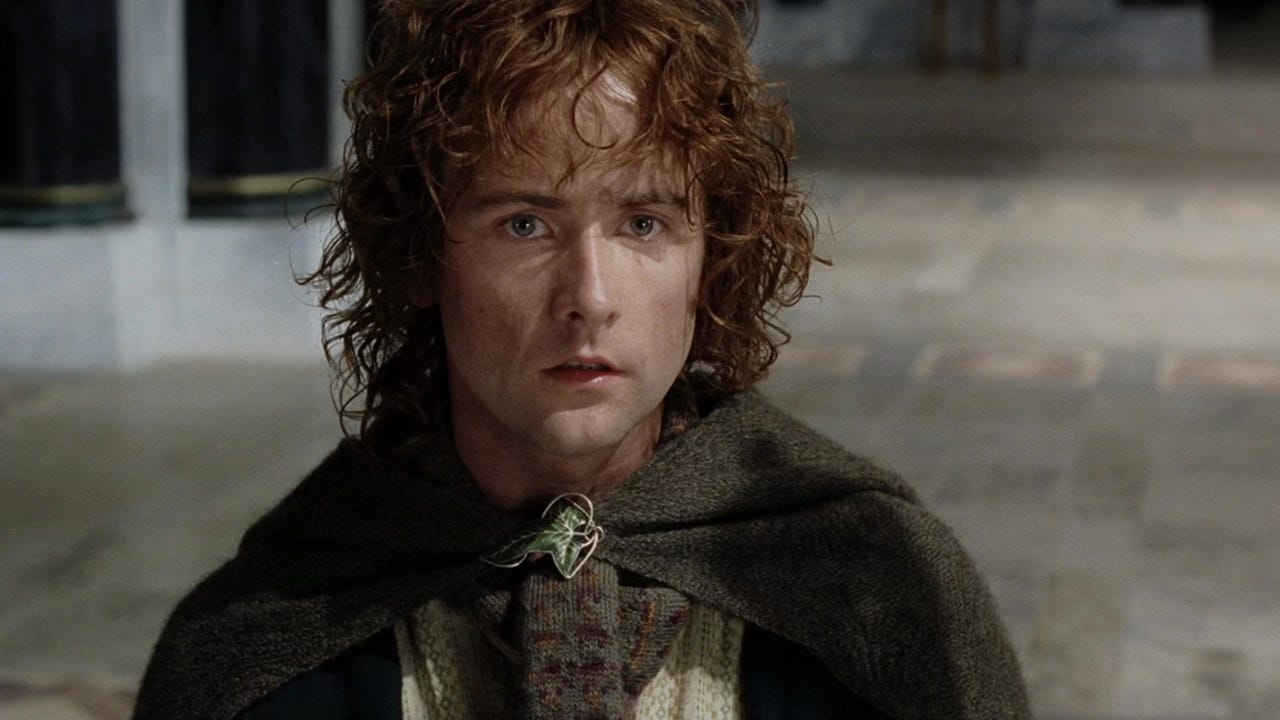
I was recently re-reading The Lord of the Rings yet again. I’m currently in The Return of the King, where Gandalf has brought Pippin to Minas Tirith after he foolishly gazed into Saruman’s palantir and attracted the eye of Sauron. Fans of both the books and the movies will recall how Pippin impressed Denethor with his forthrightness and manners and how Denethor accepts him as a Guard of the Citadel. But if you’ve only seen the movies, you won’t have experienced what comes next.
While Gandalf and Denethor settle in to discuss the affairs of war and state, Pippin is taken by one of the guards, Beregond, to be shown his new duties. What follows is a series of seemingly inconsequential scenes of quiet, uneventful moments. They check on Shadowfax to see that he’s being cared for in the stable, then they go to the cafeteria for food, of course, for a hungry hobbit, which they take to a battlement where they sit looking over the Pelennor fields. And they talk. They talk about the Shire, about Gondor, the ways of hobbits and men of the West, and of Pippin’s journeys that led him to Minas Tirith.
I can imagine that when Peter Jackson and Philippa Boyens and Fran Walsh were adapting the screenplay, it was pretty easy to discard this inconsequential scene. But that quiet scene is exactly what matters most. I would argue that it’s quite important and it’s one of the things that sets Tolkien apart from all his would-be imitators in the past half century and more.
That’s because it is this scene and so many more like it that form the heart of this tale. This simple scene of two new comrades-in-arms sitting down over a meal to begin a new friendship shows precisely what the war against Sauron is about. Yes, we need to save the Elves and prevent Orcs from pillaging the lands and darkness from defeating armies. But what they’re really fighting for, what every soldier ever fights for is to preserve his own life, the life of the man next to him, and the way of life they have always known.
“Those moments are the soul of Middle-earth—and the reason the books endure long after the last horn sounds on the Pelennor.”
Most fantasy and sci-fi authors sprint through the action we crave. A lesser author would have let Pippin and Beregond go off stage, as it were, and we’d stay with Denethor, sharp in his despair, and Gandalf, reading Denethor’s heart overshadowed by the Enemy’s influence. Instead, Tolkien gives us this quiet talk between Pippin and Beregond where they discuss the state of things in the plain, unvarnished way only soldiers do. Later, Beregond has his duties and sends Pippin to find his son who will show him around the city. It is in the small moments where Tolkien builds his world.
(It is a mistake to think that world building is only about languages and maps and magic systems. Tolkien understood that a world is built on relationships, culture, and lived experience and that everything else grows from that. A world is created by living in it, not just by writing it on a page.)
To be sure, there are good authors today who know that a steady diet of action loses its savor. Off the top of my head, I think of Christopher Rucchio’s Sun Eater series and Brandon Sanderson’s various Cosmere stories. In those books, characters step away from the action, but usually into introspection, not conversation. Rarely do we get a simple conversational repast, a kind of literary refreshment for both characters and readers and a moment of human connection.
The Lord of the Rings is filled with such scenes, from recuperating days in Rivendell to Sam’s meal of coney and taters in Ithilien and more. The most famous of these “disposable” interludes is probably the detour to Tom Bombadil’s home, where having barely begun their journey the hobbits are hosted by the enigmatic, yet powerful fellow and leave his home, having received no great benefit to their mission or so it seems.
This is precisely why I think that those who’ve only seen the Peter Jackson movies, as great as they are, and haven’t read the books are missing out on what truly makes The Lord of the Rings great. The limits of film can’t capture the quiet, lived-in richness of Tolkien’s world. The medium of movies or streaming TV itself won’t allow it. But in the books, time slows. We get to live in the subtlety. We get to breathe the grace.
And that, I think, is the gift of Tolkien. Not just the grandeur of battles or the sweep of history, but the stillness between, the quiet conversations, the meals shared, and the friendships formed not in the blaze of glory, but in the soft light of morning or the hush before war. Those moments are the soul of Middle-earth—and the reason the books endure long after the last horn sounds on the Pelennor.
You are spot-on here, Dom. And I love the scenes with Berefond and Pippin. A shame those moments didn't make it into the films. Beregond is one of the many shining examples of authentic manhood in Tolkien's work.